Compare AI model API prices: catalog and workload estimate
Comparing AI model API prices often starts with a vendor list rate, as on BenchLM. The Model pricing page on Carpe Diem shows the live marketplace rate, usage filters, and a workload estimator: up to 3 models, with the cost of a typical request on /v1 and on /router. The page is public: you do not need a wallet to read prices.
What Model pricing shows
The banner warns: it is “the live rate, not a rate card”. Prices move with demand and with what routing finds. At the time of our trial, the page stated 49% below Venice’s list rate. For llama-3.3-70b, a million input / output tokens was $0.36 / $1.44 on Carpe Diem, versus $0.70 / $2.80 at Venice.
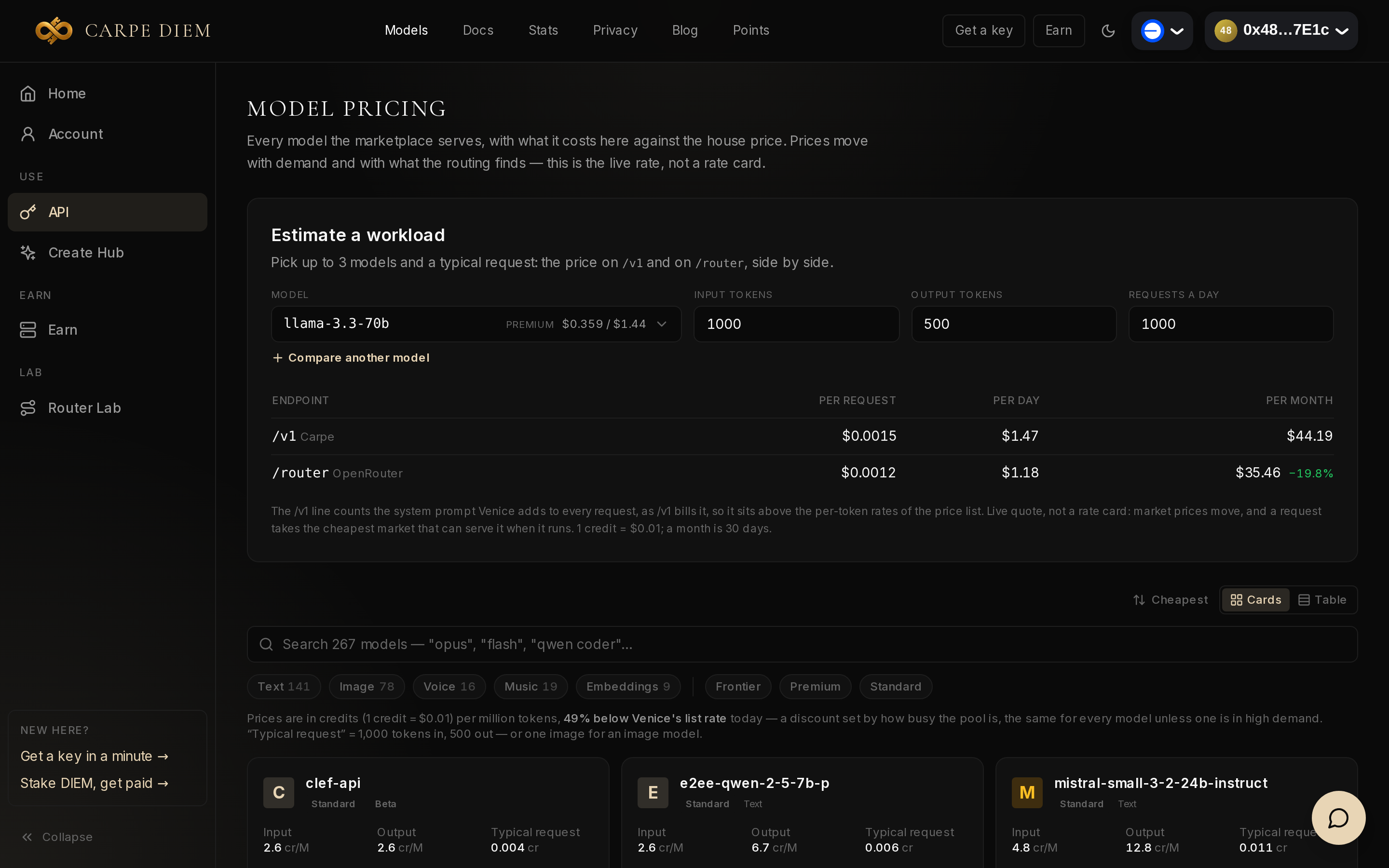
The Estimate a workload block is pre-filled: llama-3.3-70b, 1000 input tokens, 500 output, 1000 requests a day. For that workload, /v1 showed $0.0015 per request ($44.19 per month) and /router, which had picked OpenRouter, $0.0012 ($35.46 per month, −19.8%). A note says a month is 30 days and that the /v1 line includes Venice’s system prompt, billed with the call.
Below the block, the grid opens as cards, sorted cheapest first. Pills filter by use (text, image, voice, music, embeddings) or by tier, and a button switches to the Table view. The search field covers the whole catalog, 267 models that day.
Three models, one workload
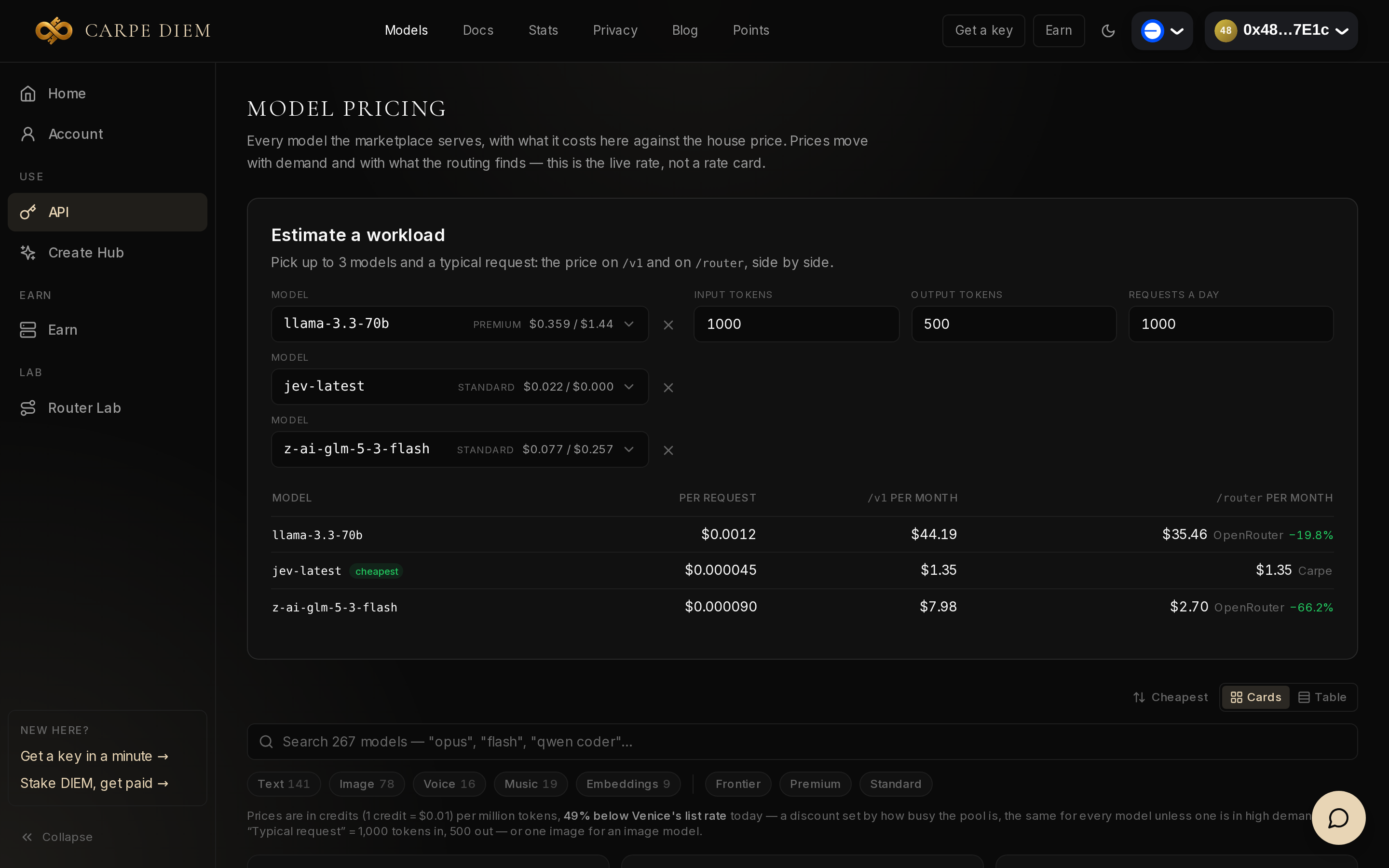
We kept the default basket and clicked Compare another model twice. The UI added jev-latest, then z-ai-glm-5-3-flash. The table switches to one row per model.
| Model | /v1 per month |
/router per month |
|---|---|---|
llama-3.3-70b |
$44.19 | $35.46 (OpenRouter) |
jev-latest (cheapest) |
$1.35 | $1.35 (Carpe market) |
z-ai-glm-5-3-flash |
$7.98 | $2.70 (OpenRouter) |
The cheapest badge marks the lowest month among the columns shown, not the best model for your task. The /router gap depends on the model: −19.8% on Llama, −66.2% on GLM Flash, none on jev-latest, already served at the best price by Carpe.
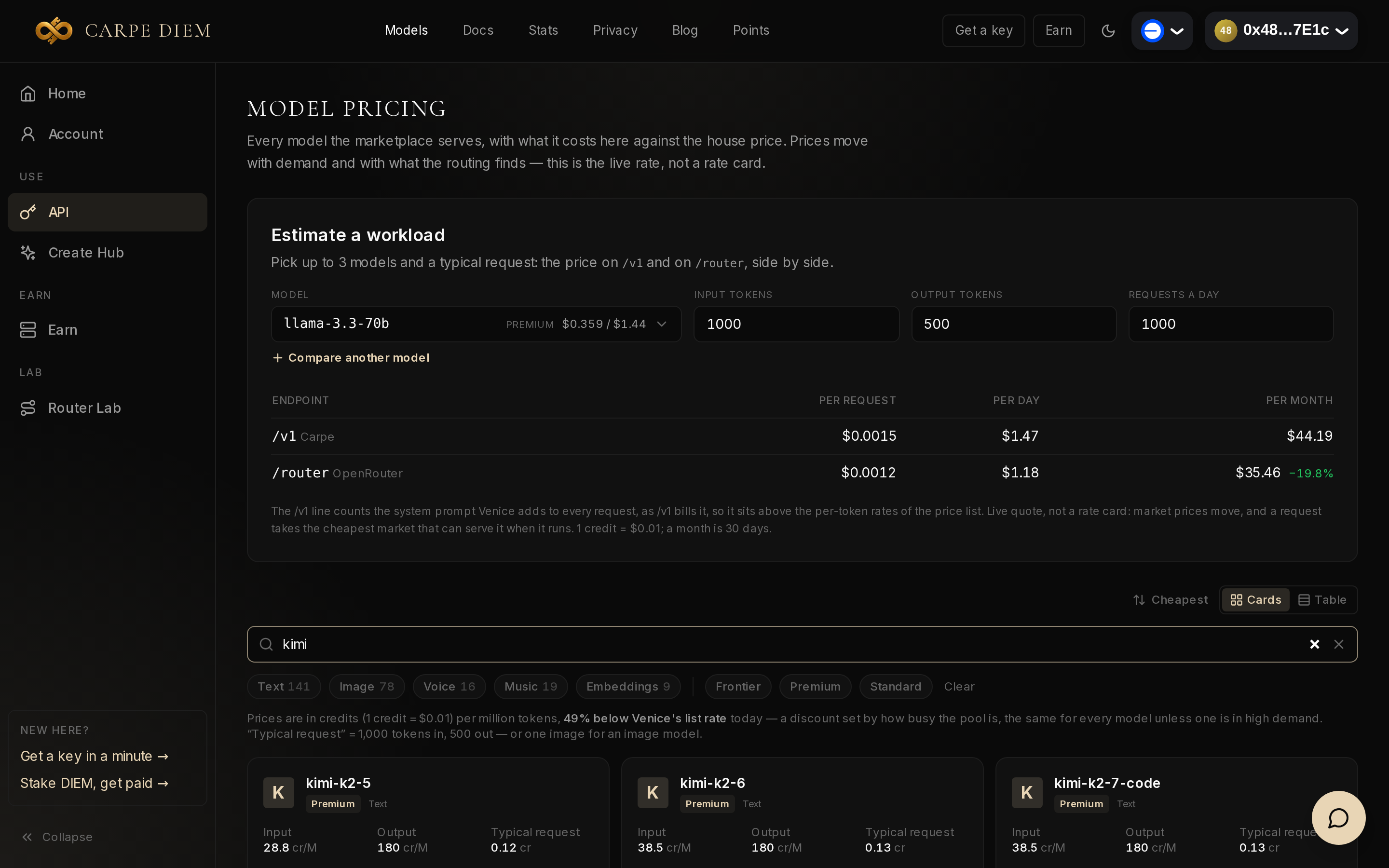
To target a specific model, search works by words: “kimi” lists kimi-k2-5, kimi-k2-6 and kimi-k2-7-code. The Estimate button on a text card adds it to the block above, up to 3.
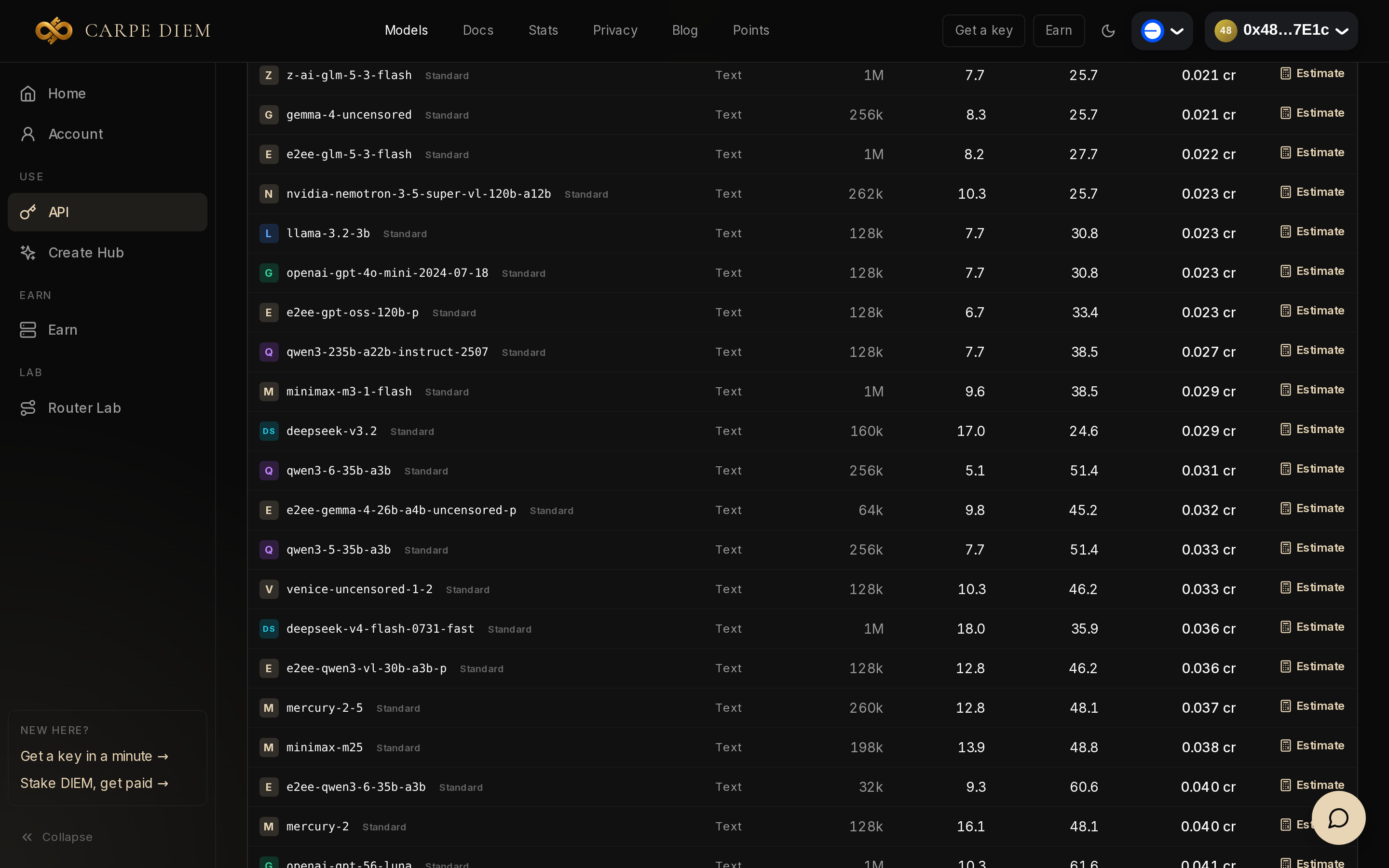
The Table view lines up id, type, context, input and output prices in credits per million, and the cost of a typical request (1000 tokens in, 500 out).
What to know before you rely on it
The estimator only takes token-priced models. An image model has no Estimate button: a token basket says nothing about a generation. The Image filter shows a Per image or Per edit price, for example 0.51 credits for lustify-sdxl and 1.54 credits for flux-2-pro.
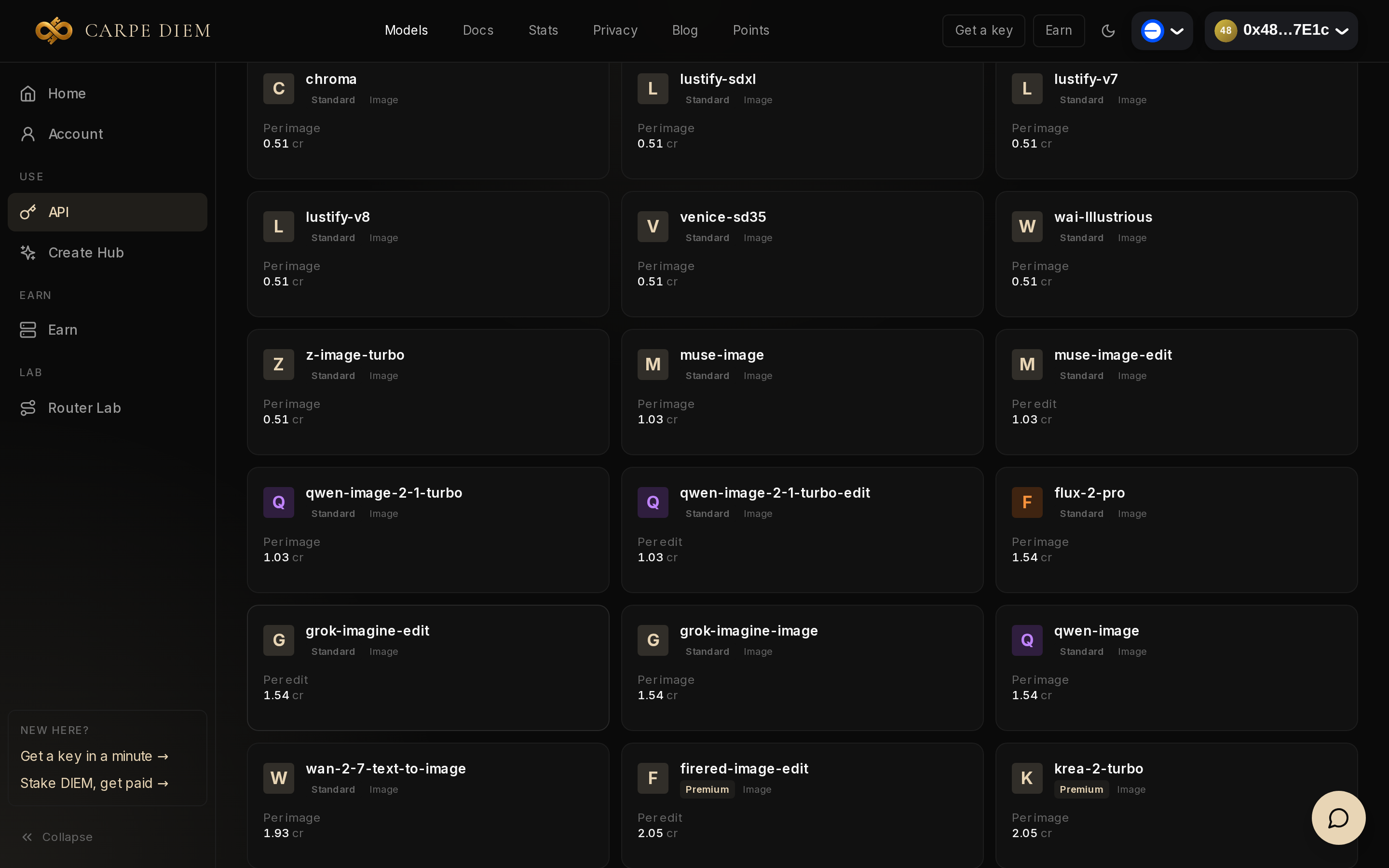
To try an image or a video, go through Create Hub.
Markets move, and a request takes the cheapest of those that can serve it when it runs. On a signed-out account, the page shows the market quotes and says real routing shows once you sign in; we were signed in.
For short, frequent calls, add venice_parameters.include_venice_system_prompt: false: you will not pay Venice’s system prompt, about 1700 tokens per call. The estimator’s /v1 line already counts it, which explains the gap with a naive calculation from the grid’s per-million rates.
What it costs
Grid prices are in credits per million tokens (1 credit = $0.01). The estimator turns them into dollars per request, per day and per month, but that is not a receipt: the amount actually billed for a real call is the one shown in the response header or the Hub. To plug in a cdm_ key next, the OpenAI Python SDK and the Kimi K3.1 Pro write-up give the base_url.
Method: trial on 8 November 2026, signed-in account, one run; image, voice and music models were not estimated.
Open Model pricing, run Estimate a workload on your three candidates, and only then code the base_url.