Black rose in SVG: a 23x cost gap, two models with no drawing
The same prompt, the same morning: eight closed SVGs, and a 23x gap between the cheapest rose ($0.009) and the dearest ($0.209). Two models were billed without delivering a usable drawing. All ten still passed the same small coding test: a JavaScript function compressRanges, six cases.
Simon Willison has sent “Generate an SVG of a pelican riding a bicycle” to every new model for years, and SVGBench scores compliance against a long list of requirements. Neither lines up the billed cost of a single drawing. We did that with a black rose.
What we measured
On 21 November 2026, ten text models (Claude Sonnet 5.5, GPT-6.1 Terra, Claude Opus 5.5, Grok 4.6, Gemini 4 Hydrogen, GPT-6.2 Astra, Gemini 4 Neon, Claude Fable 5.2, Qwen 4 Max, Kimi K3.1 Pro) received the same message, temperature 0.7, at most 12,000 output tokens, without Venice’s system prompt:
Draw a black rose lying on a stone floor, as one self-contained SVG with viewBox="0 0 400 400". No text, no external images or fonts, no script. Reply with the SVG code only.
The cost is the one read from the call, not a price × tokens product. An SVG is “closed” if it contains a </svg> tag and passes the filter (no script, no remote resource). Right after, each model wrote a JavaScript compressRanges function, checked on six cases. One run per model.
The result, in one table
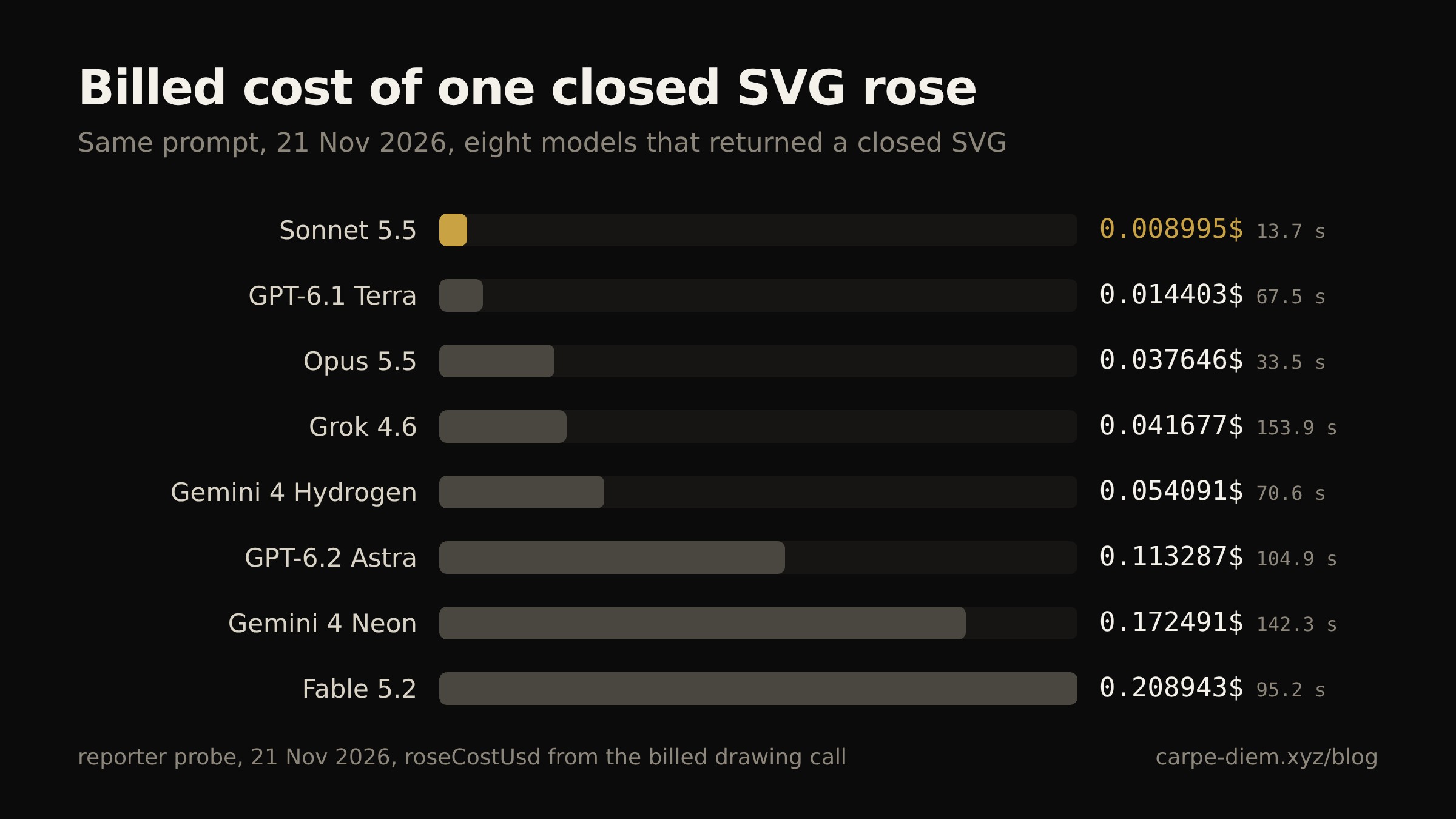
| Model | SVG | Drawing cost | Time | Code |
|---|---|---|---|---|
| Claude Sonnet 5.5 | closed | $0.009 | 13.7 s | 6/6 |
| GPT-6.1 Terra | closed | $0.014 | 67.5 s | 6/6 |
| Claude Opus 5.5 | closed | $0.038 | 33.5 s | 6/6 |
| Grok 4.6 | closed | $0.042 | 153.9 s | 6/6 |
| Gemini 4 Hydrogen | closed | $0.054 | 70.6 s | 6/6 |
| GPT-6.2 Astra | closed | $0.113 | 104.9 s | 6/6 |
| Gemini 4 Neon | closed | $0.172 | 142.3 s | 6/6 |
| Claude Fable 5.2 | closed | $0.209 | 95.2 s | 6/6 |
| Qwen 4 Max | none | $0.030 | 238.8 s | 6/6 |
| Kimi K3.1 Pro | cut off | $0.101 | 123.1 s | 6/6 |
Method: one run per model on 21 November 2026, costs read from the call. Kimi was cut off at 12,000 output tokens and was not retried; Qwen returned no usable SVG.
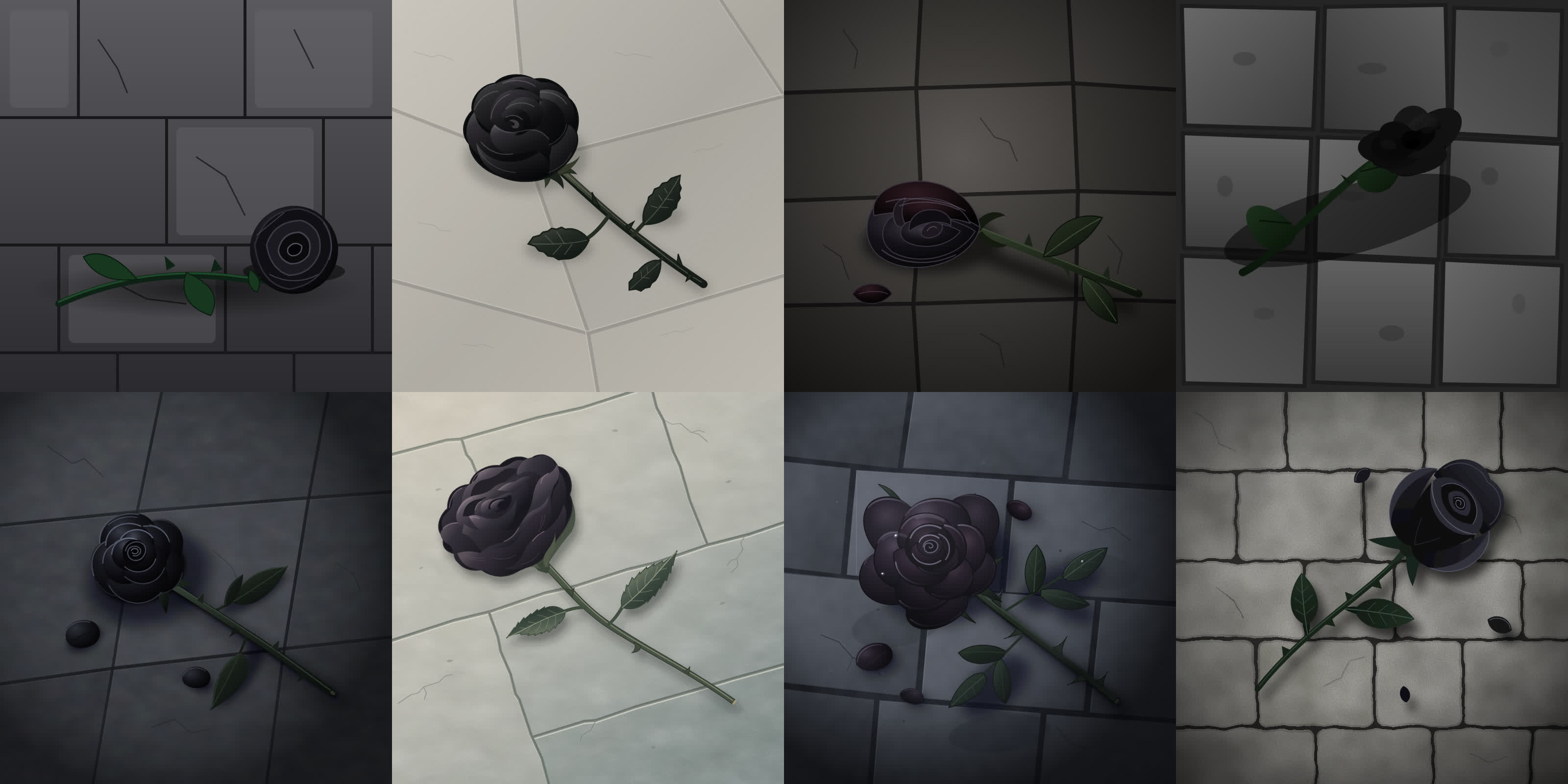
Eight rendered SVGs, cheapest (top left) to dearest (bottom right).
Sonnet draws a readable spiral in 14 paths. Terra, Opus, Hydrogen, Astra, Neon and Fable put a real corolla on paving. Grok closes its SVG, but the flower stays a dark blot: readable from far away, poor up close. Price does not follow complexity: Neon ships the heaviest file (92 paths) and still costs less than Fable, which draws only 42.
Kimi hit the 12,000-token limit before </svg>: the file starts (gradients, floor, petals) and never closes. Qwen ran for almost four minutes, billed $0.030, with nothing to show.
What this changes for you
For a closed SVG right now, we would take Sonnet: less than a cent, 14 seconds, and it looks like a rose. If the drawing has to hold up in a board, Terra at $0.014 is already enough: distinct petals, stem, pale tiles, for a fifteenth of Fable’s price.
Our small coding bench (six cases, passed by all ten) does not separate them: two of the ten models drew nothing. The Qwen 4 Max / Gemini 4 Hydrogen duel had already shown that the cheapest model per token is not always the one that finishes the task.
The same request on seven markets compared quotes. Here these are receipts, up to the rose from Fable 5.2.
Carpe Diem’s price moves during the day: reread the catalogue when you budget, rather than freezing these amounts.
What the measurement does not say
One run per model, not three. Visual quality is a judgement on the render, not an automatic score. We did not compare against Willison’s pelican, and we did not retry Kimi with a higher limit.
To redo the measurement, send the prompt above to any text model in the catalogue, or replay it in the Hub, and read the cost of the response rather than the per-million rate.